Paulo Nascimento Neto, Editor-in-Chief of journal urbe, Curitiba, Paraná, Brazil.
Geisa Bugs, Associate Editor of journal urbe, Curitiba, Paraná, Brazil.
Luciene Pimentel, Associate Editor of journal urbe, Curitiba, Paraná, Brazil.
Rodrigo Firmino, Associate Editor of journal urbe, Curitiba, Paraná, Brazil.
The field of urban studies in Latin America is characterized by the sustained and active work of researchers committed to producing context-specific knowledge about urban issues and the ways in which cities are developed and managed in the countries of the region. The diversity of constitutive processes shares a common thread in patterns of socio-spatial and environmental inequality, as well as restrictions on access to urban land and the city, which present the challenge of engaging critically with epistemological foundations and theoretical frameworks often formulated in contexts distinct from those that structure Latin American urban experiences , which denote asymmetries associated with the predominance of hegemonic modes of scientific output from the Global North.
Published by the Graduate Program in Urban Management (PPGTU/PUCPR), urbe has, since its inception, served as a medium for disseminating excellence in scientific knowledge produced about and by Latin America. Since its first volume, we have made an editorial commitment to engage with contemporary research agendas on the socio-technical arrangements that organize the city, its infrastructure, and environmental support systems, as well as their implications for urban management and the formulation of public policies.
Over the course of nearly two decades of publishing, urbe has established itself as a leading journal in urban studies. This journey is linked to an ongoing commitment to editorial quality, reflected in the adoption of rigorous peer-review processes, the expansion of diversity among authors, reviewers, and editorial board members, as well as a commitment to research ethics and the expansion of access to knowledge, in addition to the continuous pursuit of standards of scientific excellence. Inclusion in various indexing databases has strengthened its role as a space for the circulation of Latin American knowledge, contributing to the establishment of epistemological mediations between different research agendas on urban issues.
A key pillar of this trajectory is the commitment to Open Science. Urbe’s editorial policies ensure open access to published articles under the Diamond Open Access model, encourage the international dissemination of research, and support initiatives focused on the transparency, integrity, and reproducibility of scientific output. This commitment aligns with the Open Science agenda promoted by SciELO based on the IDEIA principles (Impact, Diversity, Equity, Inclusion, and Accessibility), ensuring ethical best practices while simultaneously promoting inclusion, diversity, equity, and accessibility throughout the research cycle.
Urbe recognizes SciELO’s decisive role in Latin American scientific publishing. Since its inception, the program has played a foundational role in establishing a robust model for scientific communication in the region. The promotion of best practices and the professionalization of journal editorial staff, the incorporation of digital publishing technologies, the encouragement of journal internationalization, and the ongoing strengthening of open access are some of the elements that have contributed to expanding the visibility and impact of Brazilian and Latin American scientific output. Furthermore, guided by an effort which is not subordinate to market or private interests, SciELO contributes to the collective strengthening of Brazilian scholarly publishing across diverse fields of knowledge.
It is within this context that the urbe’s Special Week takes place. The initiative seeks to present to the public a set of reflections on the role of the journal in the construction and dissemination of urban knowledge in Latin America, as well as to discuss some of the themes that have marked the contemporary debate in urban studies. Besides revisiting our own trajectory, this series seeks to reaffirm the importance of scientific journals as privileged spaces for reflection, from which epistemic communities are structured and critically debate the research themes that drive them.
The series begins with an in-depth review of the articles published in recent issues of urbe. Based on this collection, we explore the empirical and epistemological contributions, as well as the diversity of authors, institutions, and perspectives represented in the journal. This serves as a starting point for reflecting on the Open Science agenda with IDEIA and how it guides our editorial guidelines and practices on a daily basis. Throughout the week, we will also address contemporary challenges faced by scientific journals, with special mention of the use of Artificial Intelligence, the sharing of research data, and efforts to disseminate science through unconventional media, exploring complementary forms of dialogue with society.
In opening this Special Week, we reiterate our deep appreciation to SciELO for its decisive role in the professionalization, internationalization, and expansion of the impact of Brazilian science. We hope that this week’s posts will contribute to the debate that views open science and its founding principles as a central pillar in the construction and dissemination of scientific knowledge that addresses the challenges faced by society.
NETO, P.N., et al. urbe. Revista Brasileira de Gestão Urbana and the contributions to thinking about urbanism in Latin America [online]. SciELO in Perspective: Humanities, 2026 [viewed ]. Available from: https://humanas.blog.scielo.org/en/2026/05/04/urbe-revista-brasileira-de-gestao-urbana-and-the-contributions-to-thinking-about-urbanism-in-latin-america/



 The field of urban studies in Latin America is characterized by the sustained and active work of researchers committed to producing context-specific knowledge about urban issues and the ways in which cities are developed and managed in the countries of the region. The diversity of constitutive processes shares a common thread in patterns of socio-spatial and environmental inequality, as well as restrictions on access to urban land and the city, which present the challenge of engaging critically with epistemological foundations and theoretical frameworks often formulated in contexts distinct from those that structure Latin American urban experiences , which denote asymmetries associated with the predominance of hegemonic modes of scientific output from the Global North.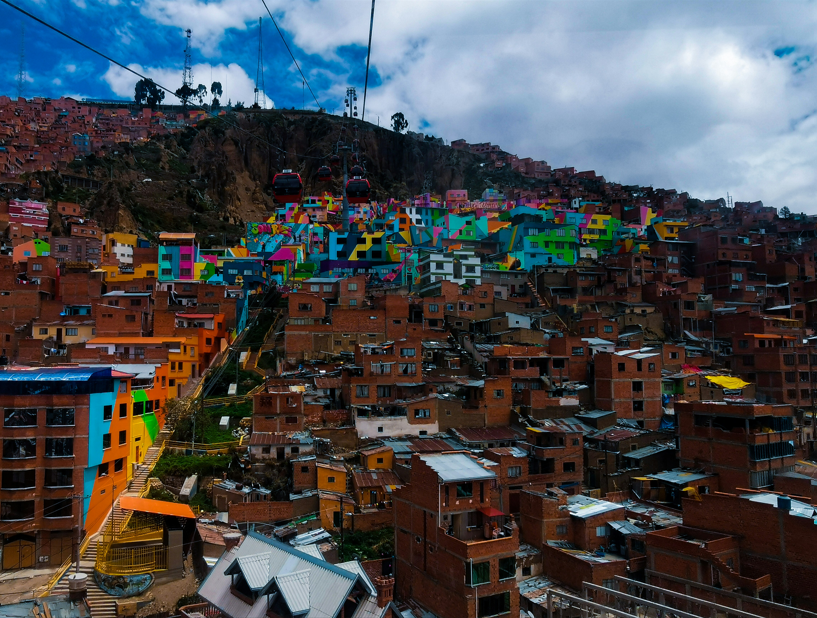







Recent Comments