Manoela Massuchetto Jazar, Assistant Editor of data curation of journal urbe, Professor in the Graduate Program in Urban Management (PPGTU/PUCPR), Curitiba, Paraná, Brazil.
Rafael Kalinoski, Media Editor at journal urbe, Researcher in the Graduate Program in Urban Management (PPGTU/PUCPR), Curitiba, Paraná, Brazil.
Taking science beyond the physical boundaries of the university has become an essential part of academic practice, since, for a long time, knowledge was confined to closed, insular circles. In this context, initiatives such as the podcast Voces de la Urbe, linked to urbe, exemplify strategies for expanding the circulation of scientific knowledge, bridging academic output with new formats of dissemination. This landscape has been changing for the better as dialogue grows between those who produce knowledge and the social groups interested in these topics or who can benefit from them. Thus, the public role of science is taking on new contours. Social media and podcasts, in this sense, are increasingly seen as strategic spaces for expanding the circulation of knowledge and bringing academic research closer to society.
But the transition from a more closed model of science to one that is more accessible and open to the public presents challenges. Perhaps the greatest of these is the task of translating scientific discourse—which has its own rules, technical terms, jargon, and distinctive structure—into language capable of engaging the general public without compromising scientific rigor. One possible strategy is to build contextual bridges that bring academic research closer to narratives understandable in people’s daily lives, connecting scientific findings to problems easily recognized by society and to more familiar communication formats.
Social media can serve as platforms for disseminating summaries of results and for promoting current debates with a speed that the timeline of a scientific article does not allow. The main advantage of this format lies in its reach and the possibilities for direct interaction with the public. At the same time, it requires a distinct communication dynamic, characterized by the frequency of posts, the use of visual resources, and the production of short texts. It is, therefore, a curatorial exercise to identify the core of the research and present it in a decoded and clear manner, without losing its essence.
Another format that has been gaining traction is podcast, which, unlike social media, offers more room for discourse and allows for long, detailed conversations capable of exploring the behind-the-scenes aspects of scientific production. In fact, oral communication serves as a path toward humanizing science, as it creates space for analogies, everyday examples, and explanations that resonate more closely with listeners’ experiences. This is evident in productions like Ciência Suja, (Dirty Science) which uses storytelling to investigate fraud and ethical dilemmas, or Prato Cheio, (Full Plate) which explores the politics behind food. Global initiatives such as The Rest is Science and BBC Inside Science also demonstrate how audio storytelling can break down the scientific method and connect it to contemporary social issues.
This podcast format proves particularly interesting for topics that require interdisciplinary reflection, as it allows for dialogue between researchers who are not always in the same departments or institutions. Furthermore, podcasts connect directly to the principle of open science, expanding the possibilities for public participation and understanding of knowledge production. In this way, they contribute to democratizing access to the university and creating channels for listening between researchers and society.
In urban studies, there are already experiences that illustrate well this potential. Podcasts like Caos Planejado (Planned Chaos) and Urbanidades (Urbanities) manage to translate theories of urbanism and urban planning into an accessible, current, and contextualized language, discussing cities from the listener’s everyday experience, such as the difficulties faced by pedestrians in urban spaces. Similarly, Sur-Urbano (South-Urban) addresses the dynamics of global peripheries, and New Books in Urban Studies acts as a bridge between more in-depth academic publications and the public interested in public policy. These are contents that transform urban planning theories into broader debates about the right to the city in an engaging way.
The journal urbe. Revista Brasileira de Gestão Urbana, published by the Graduate Program in Urban Management (PPGTU/PUCPR), has been exploring ways to expand the dissemination and outreach of its research in recent years. One example is the podcast Ningún Lunes Sin Pensar, (No Monday Without Thinking), which began a decade ago (2016) as a gathering of Latin American researchers to discuss urban management and contemporary urbanism, expanded into audiovisual media, and has produced three recent seasons: Insurgências urbanas e direito à cidade (Urban Insurgencies and the Right to the City, 2021); Dados, ativismos e cidades (Data, Activism, and Cities, 2023); and Mulheres, cidades, territórios (Women, Cities, Territories, 2024). The reach afforded by this format, unlike an in-person event, which is limited to participants present at the time of the event, circulates within a broader digital ecosystem, allowing students and interested parties from different locations to access the debates whenever they want and as many times as they wish.
Experiences like this have also encouraged urbe to expand its reach through this communication strategy, reinforcing the idea that a scientific journal need not—and indeed should not—remain an isolated island of knowledge. Thus, the Voces de la Urbe podcast was born, conceived as an extension of the journal and dedicated to broadening the reach of the topics discussed in its published articles. The aim is to strengthen the social impact of these publications by speaking different languages and engaging with different platforms.
The podcast’s name stems from the idea of giving voice to the many perspectives that shape contemporary urban discourse. After all, the city does not express itself through a single narrative; rather, it is composed of diverse experiences, conflicts, perceptions, and interpretations that manifest themselves both in academic scholarship and in the daily lives of its inhabitants. In light of this, the project seeks to emphasize the plurality of perspectives, bringing together researchers from different fields and backgrounds to discuss topics that cut across urban studies. The choice of Spanish also resonates with the magazine’s Latin American tradition and with the network of interlocutors who have historically shaped the field of urban management in the region, reinforcing the intention to build a space for the broader circulation of knowledge.
The podcast will explore some of the recurring debates featured in the journal urbe, which will launch its 18th volume in 2026, bringing together authors from various fields of knowledge for conversations that bring recent research and topics relevant to urban studies into dialogue. Given the journal’s ongoing publication schedule, the episodes will seek to reflect this thematic diversity by exploring the different perspectives found in its issues. In the first episode, the editorial team presents the journal, briefly reviews its history, and introduces the podcast as a complementary format for disseminating scientific knowledge.
JAZAR, M.M. and KALINOSKI, R. Contextual frameworks and possible interpretations for science communication [online]. SciELO in Perspective: Humanities, 2026 [viewed ]. Available from: https://humanas.blog.scielo.org/en/2026/05/07/contextual-frameworks-and-possible-interpretations-for-science-communication/



 Taking science beyond the physical boundaries of the university has become an essential part of academic practice, since, for a long time, knowledge was confined to closed, insular circles. In this context, initiatives such as the podcast Voces de la Urbe, linked to urbe, exemplify strategies for expanding the circulation of scientific knowledge, bridging academic output with new formats of dissemination. This landscape has been changing for the better as dialogue grows between those who produce knowledge and the social groups interested in these topics or who can benefit from them. Thus, the public role of science is taking on new contours. Social media and podcasts, in this sense, are increasingly seen as strategic spaces for expanding the circulation of knowledge and bringing academic research closer to society.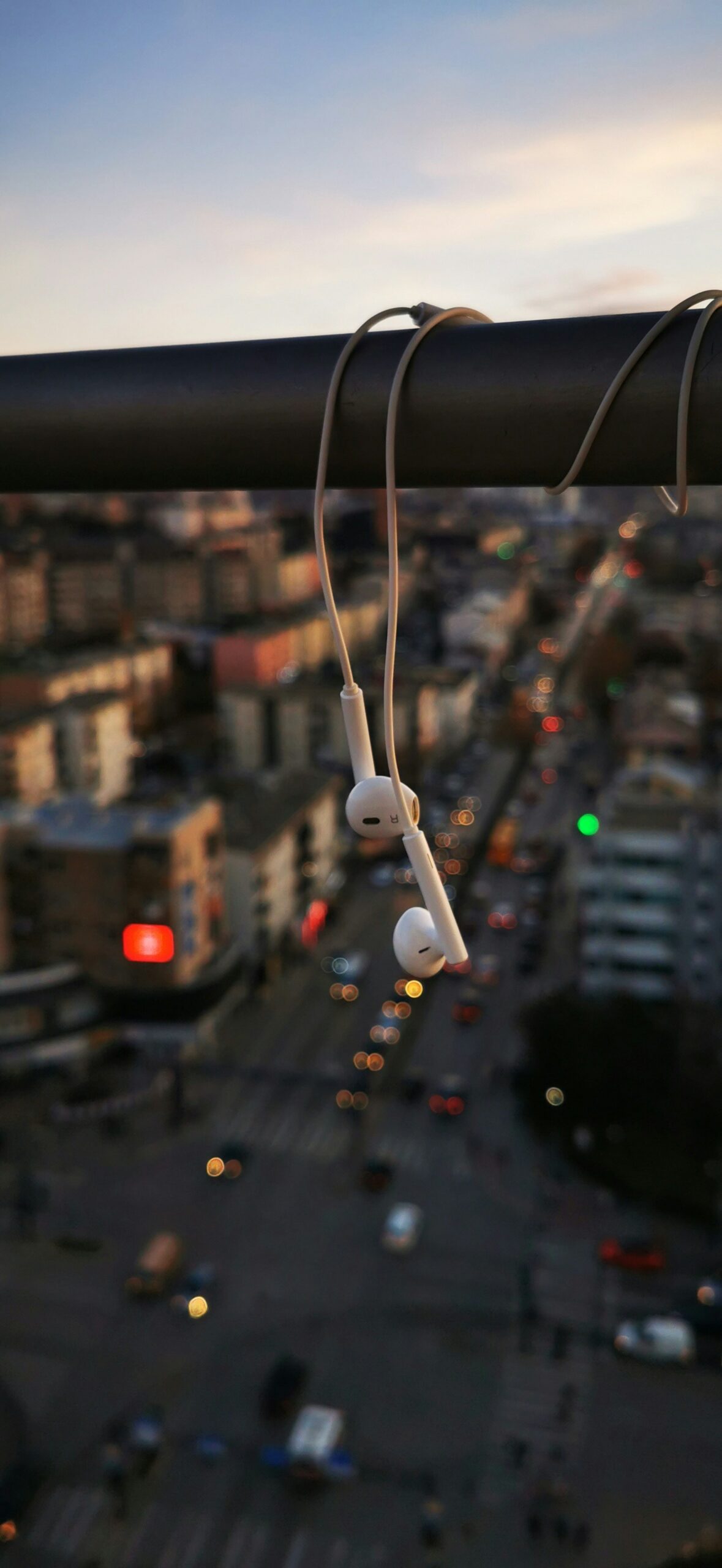







Recent Comments