



Paulo Nascimento Neto, Editor-in-Chief of journal urbe, Curitiba, Paraná, Brazil.
 Open science is characterized as an “inclusive construct that combines various movements and practices” (UNESCO, 2022), aimed at promoting broad public access to scientific knowledge and its use by society. By fostering the dissemination of the knowledge produced, scientific collaboration and information sharing are expanded for the benefit of science and society. This set of principles encompasses various dimensions, including those related to the availability, access, and reuse of research data.
Although the topic has gained greater visibility recently in the Brazilian scientific publishing environment, data availability has been part of the open science agenda for decades. Nearly three decades ago, the U.S. National Research Council (1997) already recommended full and open access to scientific data as a paradigm to be adopted internationally, especially in the case of publicly funded research.
The Organization for Economic Co-operation and Development (OECD) for its part published its first statement on the subject in 2004, emphasizing the importance of access to data from publicly funded research, an initiative that culminated in the publication of guidelines and principles in 2007. In Brazil, SciELO has played a leading role in introducing this discussion for at least fifteen years (as exemplified in a 2013 post on this blog), by promoting reflections on open data and its relevance to open science.
In this context, SciELO Data, a data repository launched in 2020 and in regular operation since January 2022, deserves a special remark. The initiative uses the open-source platform Dataverse, currently employed in the operation of circa 110 data repositories worldwide. Each journal in the SciELO collection that adopts this platform has its own Dataverse, in which the datasets associated with the articles are organized, accompanied by their respective metadata and a unique persistent identifier (DOI).
Despite this trend, the issue has not been fully incorporated into the agenda of Brazilian journals. A recent survey conducted by SciELO (2023) indicates that only about 30% of the journals in the collection mention “data” in their editorial policies. Within this subset, less than 6% require the deposit of data associated with published articles, which correspond to less than 2% of the total collection.
Availability and broad access to data, therefore, remain a relevant agenda for reflection and progress. The university, as part of its commitment to the principles of open science, has required since 2021 the mandatory deposit of data associated with all articles.
Currently, there are 171 databases available, published under a CC-BY license, with persistent identifiers (DOI) and linked to the published articles through a specific section on data availability.
This measure aims to achieve two complementary objectives. On the one hand, to strengthen the transparency and reproducibility of research, enhancing the scientific integrity and verifiability of published results. On the other hand, to enable the reuse of datasets by citing the original source, expanding the reach of research and fostering integration among different databases, with the potential to stimulate new advances in knowledge production in urban studies.
The opening of research data thus aligns with the principles of open science by expanding the possibilities for data replicability and reuse, optimizing the resources used to fund research, and fostering new findings based on data already collected. This sharing should be guided by the FAIR principles (Findable, Accessible, Interoperable, and Reusable), which establish guidelines to ensure that databases are discoverable, accessible, interoperable, and reusable. These principles are being progressively incorporated into everyday publishing practices. In a recent edition of the report The State of Open Data (2025), which surveyed 3,932 researchers from various countries (including Brazil), a significant increase in awareness of these guidelines was observed, with 40.6% of respondents reporting familiarity with the FAIR principles (Figure 1).
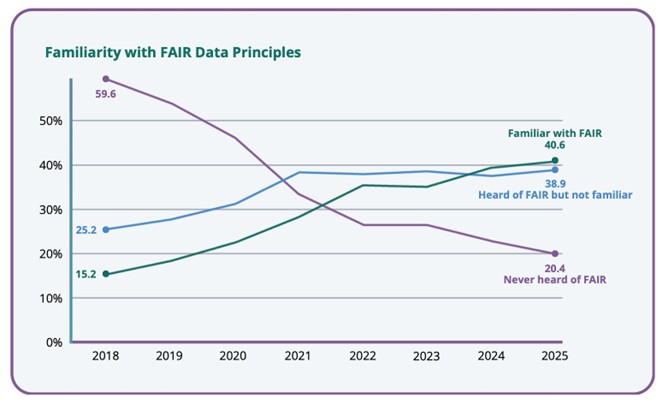
Figure 1. Level of familiarity with FAIR principles for data
On the other hand, there remains a widespread perception that researchers still receive little recognition for sharing research data: approximately 70% of respondents share this view. A similar conclusion appears in a recent SciELO report, which identified as one of the main challenges the “difficulties and resistance of researchers in advancing the sharing of their research data […]”.
This is, in fact, a central topic of debate. Particularly in Applied Social Sciences, which includes urban studies, data sharing still raises fears and uncertainties among researchers. Added to this is a relevant discussion regarding epistemological distinctions between fields of knowledge and the possibilities for reusing qualitative data.
In a recent publication on the subject, Kahryn Hughes and Anna Tarrant (2019) discuss qualitative secondary analysis (QSA) and explore its potential as a strategy for knowledge production. The authors emphasize, however, the strong relationship between data and the contexts in which they were produced, as well as the closeness between data and the researchers who originally collected them, which requires a careful approach to the contexts embedded in each study.
It is, therefore, an important paradigm to be debated within the field, with broad possibilities for transforming the ways in which knowledge is produced and shared. At the same time, there are risks that demand deeper reflection, such as the potential homogenization of social complexity, the flattening of the epistemological premises that guided data collection, or the erasure of issues sensitive to certain themes and research methods.
The growing use of artificial intelligence tools, discussed in another post in this Special Week, also emerges as a factor worthy of attention. The use of these tools can expand the capacity to analyze large volumes of data, but it also carries the risk of merely compiling qualitative datasets without proper critical engagement with the methodological designs and epistemological premises that guided their production.
Considering the dual functionality of data repositories, transparency and reproducibility on the one hand, and reuse on the other—there appears to be no controversy regarding their importance for strengthening scientific integrity by allowing the scientific community to review the data underpinning research. In this sense, data sharing aligns directly with the principles of open science with IDEIA (Impact, Diversity, Equity, Inclusion, and Accessibility), especially in the dimensions of impact and accessibility.
At the same time, particularly in applied social sciences, the reuse and integration of data in aggregated databases raises further debates. It becomes necessary to establish epistemological mediations and shared methodological standards that ensure the expected rigor in the production and use of databases intended for secondary analysis.
It is also important to consider the asymmetries in the production and circulation of knowledge between the Global North and the Global South, which requires attention to promoting equity and inclusion in the flows of research data production and use across different contexts. In Urban Studies, this debate is directly linked to the potential and limitations of international comparative studies and to the challenges of building knowledge about urban, urban management, and the city through comparisons between contexts that are often very distinct.
Beyond definitive answers, this debate raises relevant questions for the field, inviting the collective construction of pathways that allow for the full incorporation of open data as a structuring dimension of open science.
External links
Levantamento recente realizado
urbe. Revista Brasileira de Gestão Urbana – SciELO
urbe. Revista Brasileira de Gestão Urbana – Social media: Facebook | X | Instagram
Pontifícia Universidade Católica do Paraná (PUCPR) – Social media: Facebook | X | Instagram
Related Posts:





Como citar este post [ISO 690/2010]:


Recent Comments